How Commercial Power Distribution Keeps Your Business Running
What is Commercial Power Distribution?
When you walk into a retail store, office building, or warehouse, you expect the lights to come on, computers to boot up, and machinery to operate. Behind the scenes, a structured system delivers electricity from the utility company to every outlet, switch, and piece of equipment. That system is commercial power distribution. It is the network of components that receive high-voltage power from the grid and step it down, split it, and route it safely to where it is needed inside a building. Without a properly designed distribution system, a facility would not have reliable electricity, and the risk of outages or dangerous faults would be high.
Understanding how this system works helps business owners, facility managers, and anyone involved in commercial real estate make informed decisions about maintenance, upgrades, and safety. It also clarifies why professional installation and troubleshooting matter for keeping operations running smoothly.
Main Components of a Commercial Power Distribution System
Transformer and Service Entrance
Power from the utility arrives at the building through an underground or overhead service. The first major component is the transformer, which steps down the voltage from the utility's high-voltage lines to a level that the building can use. In many commercial settings, this is 480 volts for three-phase power or 208/120 volts for lighter loads. The transformer may be pad-mounted outside or located in a vault, depending on the building's size and local codes.
Main Switchgear
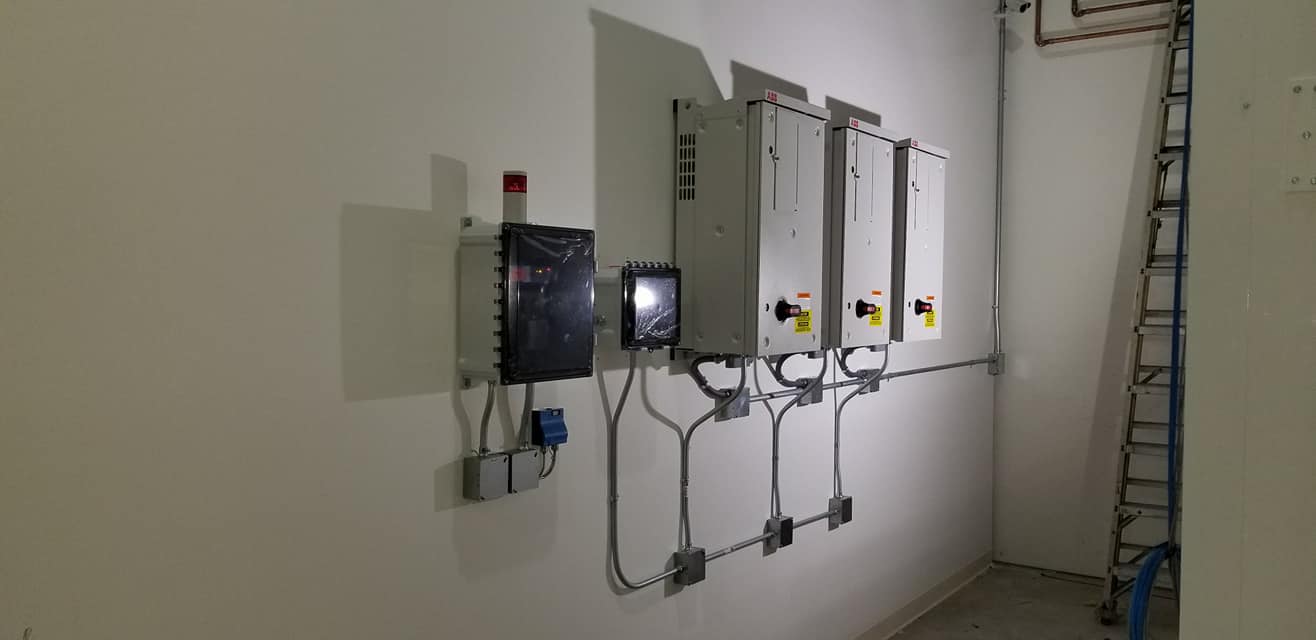
After the transformer, electricity enters the main switchgear. This is the primary distribution point, typically a large metal enclosure containing a main disconnect switch or circuit breaker. The switchgear is the first line of protection for the building's electrical system. It can shut off all power to the facility in an emergency, and it contains overcurrent protection devices that trip if there is a fault, preventing damage to equipment and reducing fire risk.
Busbars and Feeder Circuits
From the main switchgear, power is distributed through heavy copper or aluminum busbars. These are solid metal strips that carry large amounts of current. Branching off the busbars are feeder circuits, which are larger cables that run to various parts of the building, such as different floors, wings, or specific high-load equipment like HVAC units or industrial machinery. Each feeder circuit is protected by its own breaker or fuse within the switchgear.

Electrical Panels
At the end of each feeder circuit, you find electrical panels. These are the familiar gray metal boxes with multiple circuit breakers. The panel receives power from the feeder and splits it into individual branch circuits that serve lights, outlets, and smaller appliances. Each branch circuit is sized for its expected load and protected by a breaker that matches the wire size. Proper labeling and organization of panels are crucial for troubleshooting and safety.
How Three-Phase Power and Load Balancing Work
Most commercial buildings use three-phase power. Unlike residential single-phase power, three-phase delivers a more consistent flow of electricity, which is essential for motors, compressors, and large HVAC equipment. The three phases are offset, so power is always being delivered, which reduces the dip in voltage that can cause lights to flicker or motors to run unevenly.
Load balancing is the practice of distributing the electrical load evenly across all three phases. If one phase carries significantly more current than the others, it can cause overheating, voltage drops, and inefficiency. Electricians use ammeters to measure current on each phase and then rearrange circuits in the panel to balance the load. This is a routine part of commercial electrical maintenance, especially after adding new equipment. An unbalanced system can lead to nuisance breaker trips, reduced equipment life, and higher energy costs.
Safety and Reliability Considerations
A commercial power distribution system is built to be safe, but it requires ongoing attention. One common issue is overheating at loose connections. Over time, vibration, thermal expansion, and corrosion can cause busbar joints or breaker terminals to loosen, increasing resistance and generating heat. This heat can damage insulation and eventually cause a fault or fire. Regular thermal imaging inspections by a qualified electrician can catch these hot spots before they become serious.
Another concern is coordination of overcurrent protection. If a fault occurs on a branch circuit, only that circuit's breaker should trip, not the main breaker or the feeder breaker. This selective coordination is designed into the system, but it can be compromised if breakers are replaced with mismatched types or if the system is modified without proper engineering. A facility that experiences frequent nuisance tripping of the main switchgear likely has a coordination problem that needs professional evaluation.
What This Means for Facility Managers and Business Owners
You do not need to be an electrician to appreciate the importance of your building's power distribution system. But knowing the basics helps you ask the right questions. When planning a renovation or adding new equipment, it is wise to have a load calculation done. Adding too many high-draw devices to an existing panel can overload the feeder or transformer, leading to voltage problems or even a fire. An electrician can determine if the existing system has capacity or if an upgrade is needed.
Regular maintenance is also key. While you can visually inspect panels for signs of overheating or damage, any work inside the panel or switchgear should be left to a professional. Simple checks you can do include ensuring that panel doors are closed and latched, that no dust or debris has accumulated, and that nothing is stored in front of electrical equipment. If you notice flickering lights, breakers that trip frequently, or a burning smell, those are signs of a problem that needs immediate attention from a qualified electrical contractor.
For businesses in the San Jose and Santa Clara areas, Wooding Electric offers commercial electrical installation, repair, troubleshooting, upgrades, and power distribution services. Their team understands the local codes and the specific demands of commercial facilities in the Bay Area. Whether you need a new transformer, a panel upgrade, or help with load balancing, having a reliable partner is essential for keeping your operations running without interruption.
A well-maintained power distribution system is invisible when it works correctly. It only gets attention when something goes wrong. By understanding the components and the principles of three-phase power and load balancing, you can be proactive about maintenance and avoid costly downtime. Investing in a professional assessment of your system can pay off in reliability, safety, and energy efficiency. Wooding Electric can help you identify potential issues before they cause a problem, ensuring that your facility has the power it needs to run smoothly.
In summary, commercial power distribution is the backbone of any business. It is a complex system of transformers, switchgear, busbars, and panels that work together to deliver electricity safely and reliably. Knowing how it works empowers you to make better decisions about your facility's electrical infrastructure. It also highlights the value of professional installation and maintenance, which are not areas to cut corners. A small investment in understanding and maintaining your system can save you from major disruptions and safety hazards down the road.
Ends · POWERWISEBUSINESS